Find the cause first
Solar PV Fault Finding in Dorset
Start with a proper diagnosis.
- Independent Technicians
- No Obligation
- No Pressure

Find the cause first
Start with a proper diagnosis.
When a solar system underperforms, there is not always an obvious failed part. The problem may involve a panel, string, connector, cable, inverter, protective device, monitoring setup or a combination of factors. Replacing components without diagnosis can waste time and money.
Fault-finding enquiries are suited to systems with unexplained low output, repeated errors, intermittent operation or other symptoms where the cause is unclear. An independent technician gathers the available evidence and works through the relevant parts of the installation methodically.

Diagnosis is particularly valuable when the system still works partially or the symptoms come and go. Historical generation information and inverter messages can also provide useful clues.
A noticeable fall in output compared with previous performance deserves investigation, particularly where there has been no obvious change to explain it.
Problems that disappear and return can require more careful diagnosis than a permanent failure. Technicians use the symptoms and available system information to narrow down possible causes.
An inverter may report a problem without making the underlying cause obvious. Fault finding looks beyond the message itself.
Where several components have been operating for years, diagnosis can help distinguish an isolated failure from broader age-related issues.

Symptoms, system information and inspection findings are used to narrow down the problem.
The point of diagnosis is to avoid replacing sound components without good reason.
Once the likely cause is known, the technician can explain what action makes sense and what it involves.
If nobody has been able to explain why your system is underperforming, fault finding is a sensible place to start.
Free — no obligations
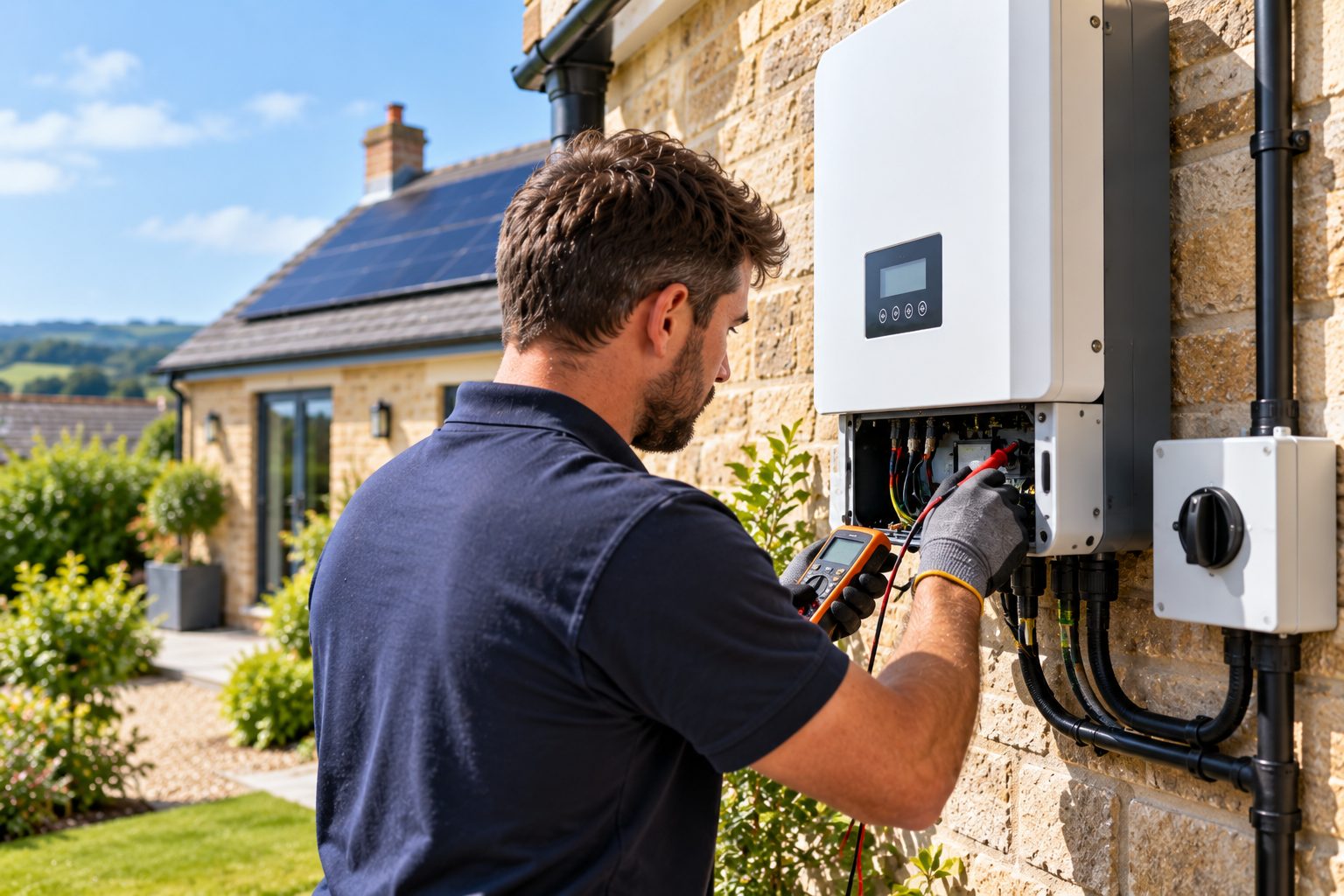
The technician establishes what has changed and when the symptoms first appeared.
Error messages, monitoring information and previous generation patterns can all help.
Relevant system components are checked methodically to isolate the problem.
The technician explains the findings and what repair, monitoring or further action is appropriate.